-
E-mail
san.youzhang@163.com
-
Phone
13606747928
-
Address
No. 288 Cizhang Road, Zhangqi Town, Cixi City
Cixi Sanyou Machinery Factory
Principle and common problem handling of cooling system for CNC automatic lathe
Date: 2025-06-19Read: 6
During the machining process of a CNC automatic lathe, the cutting friction between the tool and the workpiece, as well as the operation of the transmission components, will generate a large amount of heat. If not dissipated in a timely manner, it will lead to increased tool wear, workpiece deformation, and affect machining accuracy and equipment life. As a key auxiliary system of the lathe, the normal operation of the cooling system is crucial. A deep understanding of the cooling system principle and mastery of common problem handling methods are necessary measures to ensure efficient and stable machining of lathes.
1、 Working principle of cooling system
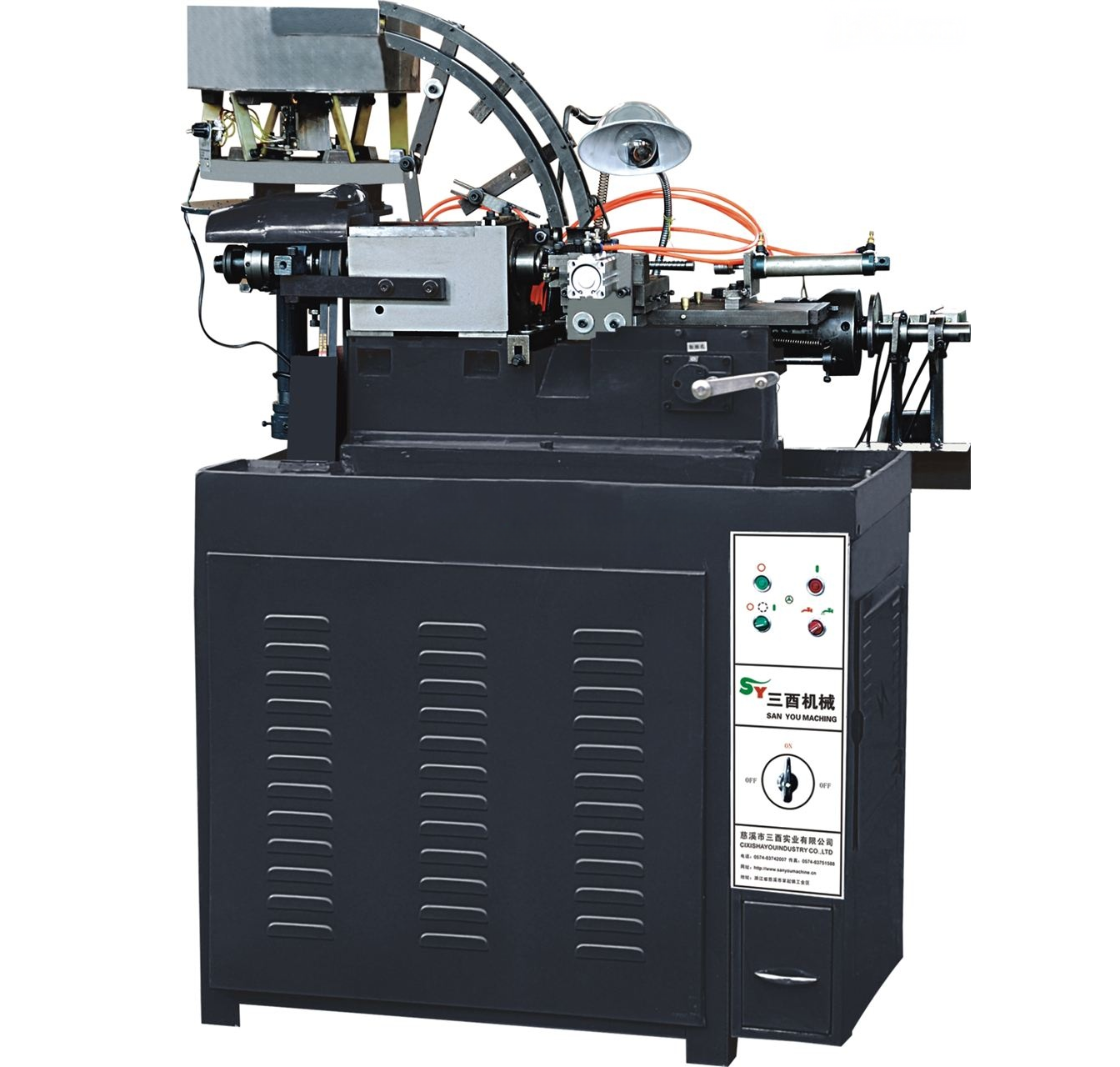
The cooling system of CNC automatic lathe mainly consists of cooling pump, cooling water tank, filter, nozzle and pipeline. The cooling pump serves as a power source to extract the coolant from the cooling water tank and transport it to the filter through pipelines. The filter filters impurities from the coolant to prevent chips, abrasive particles, etc. from entering the nozzle and causing blockage, ensuring the cleanliness of the coolant. The filtered coolant is transported through pipelines to the nozzles in the machining area of the machine tool, and sprayed at a certain pressure onto the cutting parts of the tool and workpiece, achieving cooling and lubrication of the tool and workpiece. At the same time, after taking away heat, the coolant carries chips back to the cooling water tank, completing one cycle. Some cooling systems are also equipped with heat exchangers, which use circulating water or air to cool the high-temperature coolant and maintain its temperature stability.
2、 Common problems and solutions
(1) Insufficient coolant flow
Insufficient coolant flow can lead to a decrease in cooling efficiency, mainly due to cooling pump failure, pipeline blockage, filter blockage, etc. When the cooling pump malfunctions, it is necessary to check whether the pump body is damaged and whether the impeller is stuck. The operating status can be determined by measuring the working current of the pump, and the cooling pump can be replaced if necessary. Pipeline blockage is often caused by the deposition of impurities in the coolant. High pressure air can be used to blow the pipeline, or the pipeline can be disassembled for cleaning. When the filter is clogged, the filter element should be replaced in a timely manner to ensure smooth flow of coolant.
(2) The coolant temperature is too high
Excessive coolant temperature may be caused by heat exchanger failure, insufficient cooling water tank capacity, or high ambient temperature. When the heat exchanger fails, it is necessary to check whether the internal pipes of the heat exchanger are blocked and whether the heat sink is damaged. This can be solved by cleaning the heat exchanger or replacing damaged parts. If the capacity of the cooling water tank is insufficient, the water tank capacity should be appropriately increased or auxiliary cooling devices should be added. When the ambient temperature is too high, measures such as workshop ventilation and installing air conditioning can be taken to reduce the ambient temperature and assist in cooling the coolant.
(3) Nozzle blockage
Blockage of the nozzle can cause uneven spraying of coolant, affecting the cooling effect. This is usually due to excessive impurities in the coolant or long-term use without cleaning. When handling, a fine needle can be used to clear the nozzle hole first. If the blockage is severe, the nozzle needs to be disassembled and soaked in a special cleaning agent for cleaning. After cleaning, rinse with clean water and reinstall.
The stable operation of the cooling system in CNC automatic lathes has a significant impact on machining quality and equipment performance. By mastering its working principle and promptly addressing common issues, the efficiency of the cooling system can be effectively improved, ensuring continuous and efficient machining of the lathe.