-
E-mail
616976970@qq.com
-
Phone
13582473997
-
Address
Houtang Industrial Zone, Yanshan County, Hebei Province
Product Categories
Cangzhou Jinjaite Machine Tool Accessories Manufacturing Co., Ltd


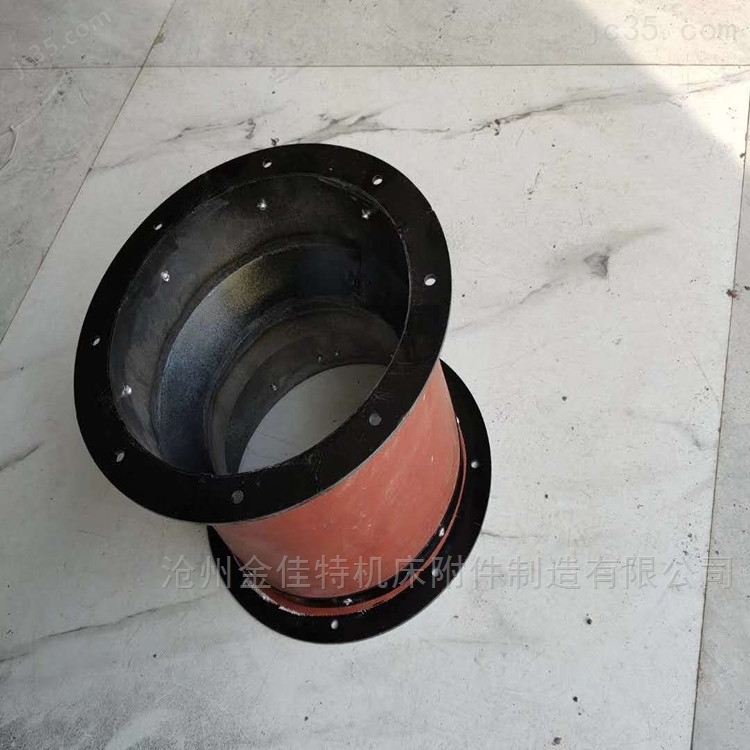
Silicone canvas soft connection for air duct
NegotiableUpdate on 01/30
- Model
- Nature of the Manufacturer
- Producers
- Product Category
- Place of Origin
Overview
Silicone canvas soft connection for air ducts, high temperature and fireproof soft connection, coating machine soft connection material types. During the molding process of thermoplastic plastics, due to the volume change caused by crystallization, strong internal stress, large residual stress frozen in the plastic part, and strong molecular orientation, the shortening rate is larger than that of thermosetting plastics. The shortening rate is wider in scale and has significant directionality. The shortening after other molding, annealing or humidity control treatments is usually larger than that of thermosetting plastics.
Product Details
Silicone canvas soft connection for air ductSpecial high-temperature resistant fireproof cloth (with steel wire) This product has unique high-temperature resistance, breathability resistance, aging resistance, strong flexibility, and good toughness. It is a multi-purpose, high-performance synthetic material widely used in aerospace, chemical large-scale power generation equipment, machinery, metallurgy, fire prevention, ventilation and other fields.
It has functions such as fire prevention, smoke exhaust, noise reduction and vibration isolation, and can be applied to the soft joints and variable diameter interfaces of building smoke exhaust systems, making it an ideal material for building smoke exhaust. Its characteristics include good high-temperature performance, high working pressure, gas flow rate up to 20 meters per second, long service life, acid, alkali, oil resistance, corrosion resistance, moisture resistance, light volume, and easy installation.
Attribute: Silencing Isolate and absorb the working noise of the fan, isolate the vibration between the fan and the air duct Constant temperature, constant humidity, anti-corrosion, and acid resistant.
Temperature range: It can be used for more than 6 hours in an environment with a temperature of 300 degrees Celsius, can be used for a long time at 250 degrees Celsius, can withstand instantaneous high temperatures of 600 degrees Celsius, and still maintain good material properties at low temperatures of -70 degrees Celsius.
Material: Made of double-layer silicon titanium adhesive, stainless steel wire, glass fiber blend, high-performance synthetic material.
Silicone canvas soft connection for air ductHigh temperature resistant and fire-resistant soft bonding, coating machine soft bonding material types. During the molding process of thermoplastic plastics, due to the volume changes caused by crystallization, strong internal stress, large residual stress frozen in the plastic part, and strong molecular orientation, the shortening rate is larger than that of thermosetting plastics, with a wider shortening rate scale and significant directionality. The shortening after other molding, annealing, or humidity control treatments is usually larger than that of thermosetting plastics.
When forming plastic parts, the melted material and the outer layer of the mold cavity immediately cool to form a low-density solid shell. Due to the poor thermal conductivity of plastic, the inner layer of the plastic slowly cools, forming a shortened high-density solid layer. So the wall thickness, slow cooling, and high-density layer thickness are greatly reduced. In addition, the presence or absence of inserts, as well as the planning and quantity of inserts, directly affect the direction of material flow, density dispersion, and the reduction of resistance, so the characteristics of plastic parts have a significant impact on reducing size and directionality.


