-
E-mail
yuyaojiali@163.com
-
Phone
18069090269,13805805063
-
Address
No. 100, Wushan West Road, Zhangting Town Industrial Zone, Yuyao City
Product Categories
Ningbo Jiayi Robot Co., Ltd. (formerly known as Yuyao Jiali Machinery)
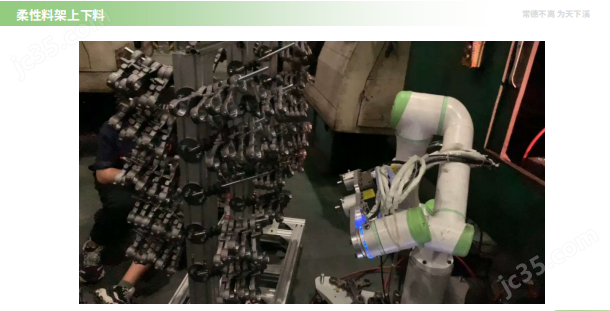
Flexible material rack loading and unloading collaborative robot
NegotiableUpdate on 01/12
- Model
- Nature of the Manufacturer
- Producers
- Product Category
- Place of Origin
Overview
The characteristics of the flexible material rack loading and unloading collaborative robot are: it is easy to coordinate with humans, has built-in safety functions for human-machine cooperation, is flexible and easy to deploy, has intuitive programming, and can work together with humans in narrow spaces, with high flexibility.
Product Details
Flexible material rack loading and unloading collaborative robotFeatures: An Rou Jian human cooperation, built-in safety functions for human-machine collaboration, flexible and easy deployment, intuitive programming, able to work collaboratively with people in narrow spaces, high flexibility.
Flexible material rack loading and unloading collaborative robotAdvantages:
Automated production has revolutionized the traditional manufacturing model by introducing robot technology, computer control systems, and intelligent software. Its core advantages are reflected in multiple dimensions:
1. Efficiency leap: Automated systems can achieve 7x24 hour uninterrupted operation, significantly accelerating production pace, reducing equipment idle and switching time, and greatly improving equipment overall efficiency (OEE). The output per unit time has doubled, shortening the product launch cycle.
2. High quality: Automated equipment has high repeatability and consistency in executing tasks, almost eliminating fluctuations caused by human operational errors, effectively reducing defect rates and rework costs, ensuring stable and reliable product quality, and meeting strict standards.
3. Cost optimization: Automation directly reduces the reliance on skilled operators on the production line, lowering long-term labor costs (including salaries, benefits, and training). Meanwhile, a higher yield rate reduces raw material waste and waste disposal costs, while precise control optimizes energy consumption.
4. Safety guarantee: Automation liberates workers from dangerous (such as high temperature, toxicity, heavy load), dry, and repetitive physical labor environments, significantly reducing the incidence of work-related accidents and occupational diseases, and creating a safer and more humane working environment.
5. Flexibility enhancement: Programmable automation systems (especially collaborative robots and flexible production lines) can quickly adapt to product changes and process adjustments, shorten line changing time, and enable enterprises to respond more economically and efficiently to market demands for small batches, multiple varieties, and customization.
6. Data driven decision-making: Automated systems collect massive amounts of production data in real-time (such as equipment status, process parameters, output, energy consumption), providing a solid data foundation for process monitoring, quality traceability, predictive maintenance, resource optimization, and intelligent decision-making, helping lean production and continuous improvement.


