-
E-mail
450660855@qq.com
-
Phone
13805846644
-
Address
No. 20 Xingxue Road, Yuyao City, Zhejiang Province
Ningbo Hengfeng CNC Machine Tool Co., Ltd
Introduction to the importance of establishing a regular maintenance mechanism for high-speed end face milling machines
Date: 2025-12-23Read: 6
As an efficient equipment in the field of metal cutting, high-speed end face milling machines are widely used for flat milling and high-precision end face machining of large plates, boxes, frames, and other workpieces. Its spindle speed is high, cutting force is large, and continuous operation intensity is high, which puts strict requirements on equipment stability and accuracy maintenance. If there is a lack of systematic maintenance, it can easily lead to spindle wear, rail scratches, decreased accuracy, and even sudden failures. Establishing a scientific and standardized regular maintenance mechanism for high-speed end face milling machines is the core to ensure their long-term and efficient operation.
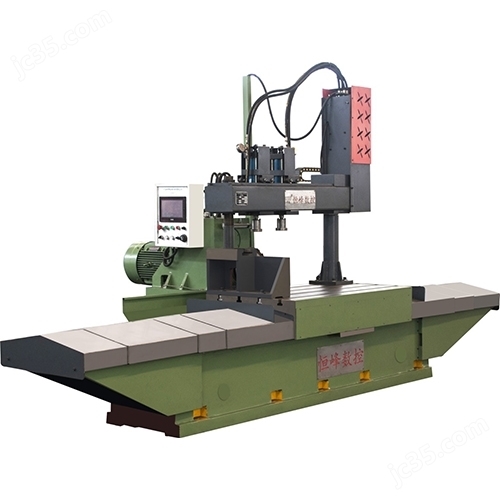
1、 Daily routine maintenance (performed by operators)
Cleaning the machine tool: Remove chips and coolant residue from the worktable, guide rails, and protective cover to prevent hard particles from scratching the precision surface;
Check lubrication: Confirm that the oil level of the automatic lubrication system is normal and that the oil outlets at each lubrication point are smooth (especially the X/Y/Z axis guide rails and screws);
Observe the operating status: listen for any abnormal noise from the spindle and motor, and check if the air pressure and hydraulic pressure are stable.
2、 Weekly in-depth maintenance
Guide rail and screw maintenance: Use a lint free cloth dipped in specialized guide rail oil to wipe, remove old oil film and debris, and reapply high adhesion lubricating grease;
Cooling system cleaning: Clean the filter screen and nozzle of the coolant tank, replace the deteriorated emulsion, and prevent bacterial growth and pipeline blockage;
Tool and fixture inspection: Confirm that the fastening bolts of the cutter head are not loose, the blades are not broken, and the positioning surface of the fixture is clean and undamaged.
3、 Monthly functional testing
Main shaft condition assessment: Check whether the spindle taper hole has burrs or rust, and use a dial gauge to detect the radial runout of the spindle (should be ≤ 0.01mm);
Transmission system verification: Test the reverse clearance of each shaft, compensate through system parameters or mechanical adjustments;
Electrical cabinet dust removal: After power failure, use dry compressed air to blow the PLC, driver, and wiring terminals to prevent dust accumulation from causing short circuits.
4、 Quarterly professional maintenance
Replace lubricating oil/grease: The oil in the spindle box, gearbox, and lubrication station should be replaced according to the manufacturer's specified cycle (usually 2000-3000 hours);
Precision re inspection: Use a laser interferometer or standard gauge block to detect flatness, perpendicularity, and positioning accuracy, and issue a maintenance report;
Safety device testing: Verify whether the emergency stop button, protective door interlock, overload protection and other functions are sensitive and reliable.